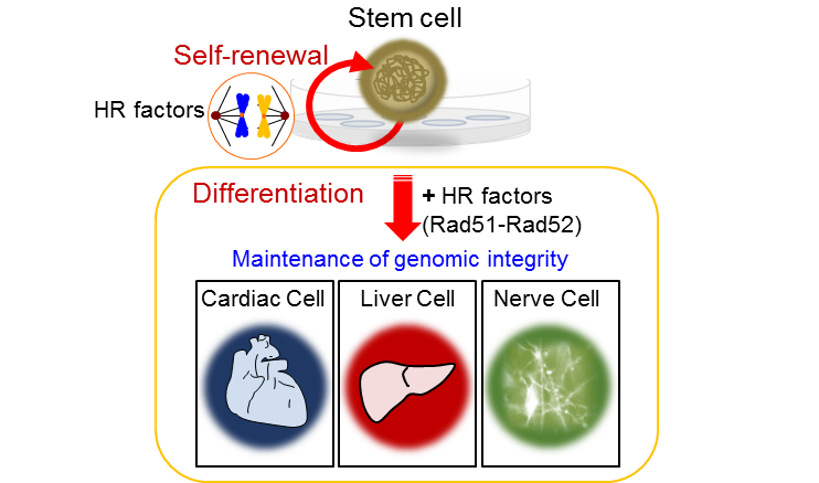
DNA repair mediated by homologous recombination (HR) is essential for the preservation of genomic integrity, and the regulatory mechanisms of HR have been characterized in diverse organisms, including plant, animal and yeast. HR is a major DNA metabolic pathway that facilitates high-fidelity repair of DNA gaps, interstrand crosslinks (ICLs), and double-strand breaks (DSBs). HR is crucial for promoting mitosis by repairing broken replication forks that mainly occur in late S and G2 phases and during the genetic exchange between homologous chromosomes that creates non-identical haploid gametes during meiotic cell division. Moreover, several human cancers associated with genomic instability can be caused by defects in HR or associated processes. Mammalian Rad51 is homologous to bacterial RecA and yeast Rad51, which are also essential for DNA replication, DNA repair, and genetic recombination. Loss of these controls due to functional defects in HR proteins is a key event leading to cell death, genomic instability, and tumorigenesis.